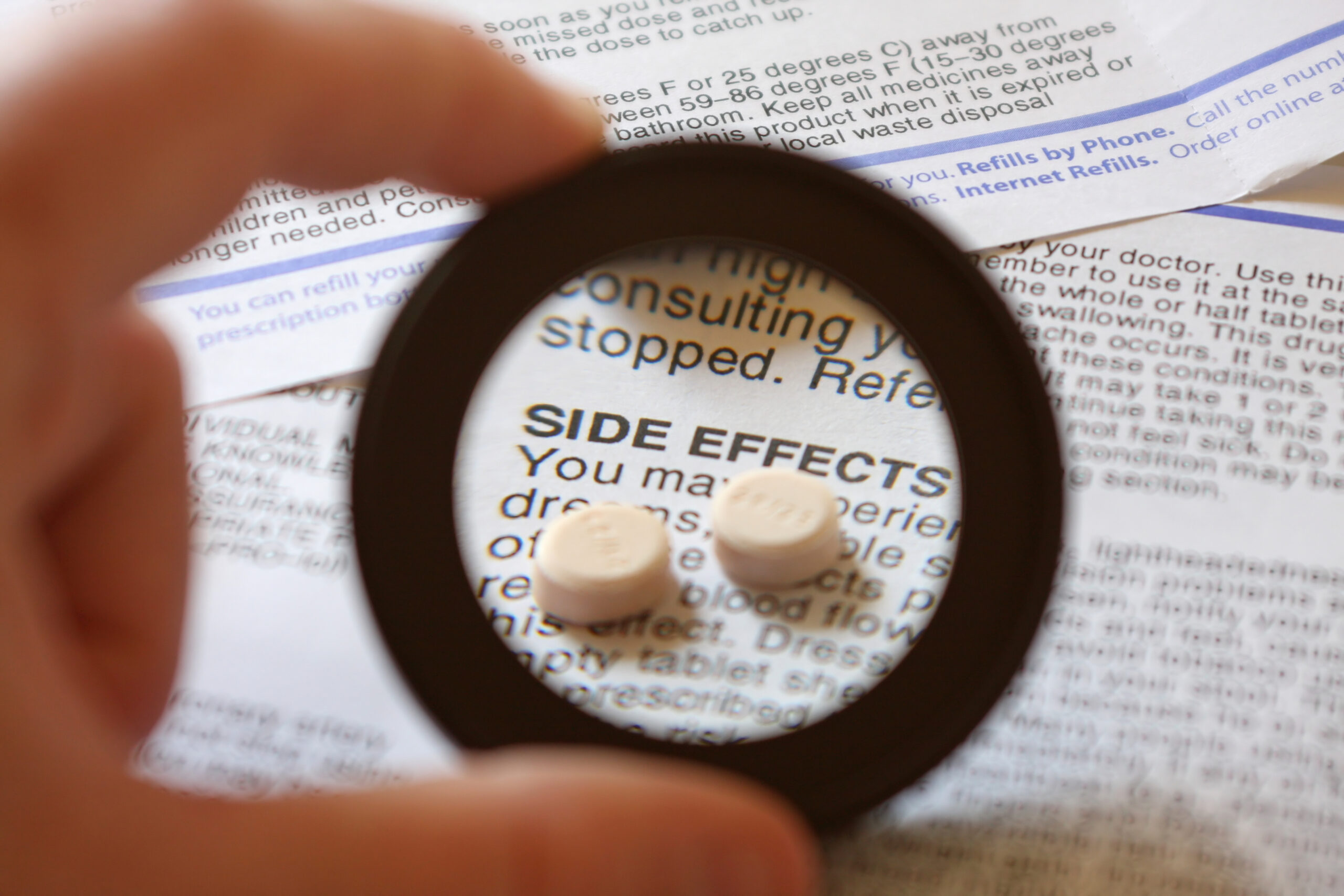
We’ve all seen the commercial—You know, the one advertising a medication, showing how wonderful it is for the condition it treats and the beautiful, smiling people who take it. Then you’re bombarded with the list of dreaded side effects that are rattled off like an auctioneer at Christie’s. Suddenly your unbridled enthusiasm for the medication is immediately crushed and you walk away confused and disheartened and thinking, “No way would I take that.”
Side effects are a fascinating topic in medicine today. Every day I have patients decline medication because they are afraid of possible side effects. Did you notice I added possible? That’s one of the first things I always highlight is that not everyone gets a side effect. Although a medication might have a laundry list of effects listed or some that seem quite scary, like heart attack or liver problems, you must take it with a grain of salt. The frequency of a side effect is important as well as the severity. Side effects are often categorized as common or serious. Common side effects include nausea, diarrhea, fatigue or headache. A serious side effect is one that requires hospitalization, is life threatening, results in death, disability or permanent damage or exposure prior to conception or during pregnancy caused birth defects. Serious side effects are typically highlighted as a boxed warning (Read Here). Side effects are also usually graded on a scale of 1-4 according to their severity as well. Think of grade 1,2 as a nuisance, grade 3 as interfering with work or daily activities and grade 4 as requiring hospitalization.
You might be wondering, how does a side effect get listed for a drug? Well during clinical trials, when a medication is being studied, side effects are recorded in detail. So, anything that a patient notices, such as a headache, an upset stomach or even a toothache would be documented. More serious events, like heart problems or lab abnormalities are also included. Deaths are also recorded but keep in mind that can include deaths from other causes (like a car accident) and does not suggest a cause-effect relationship with the medication. After collecting side effects during the clinical trial process, a drug manufacturer includes a side effect list with a new drug application to the Food and Drug Administration (FDA). The FDA reviews the side effect data and then determines which effects are common, serious, or potentially life-threatening. The FDA will also make recommendations for laboratory monitoring based on these findings. After a drug has been on the market, side effects are still collected through MedWatch (Read Here). This is a platform open to the public to continue the collection of adverse events and can result in changes to a medication’s label.
So when you read your label on your ibuprofen or your next prescription drug, it’s important for you to be aware of potential side effects but also understand that you may not experience any side effects at all. And while we think of side effects as always having a negative connotation, some have had a positive impact and led to new indications for a drug. For example, finasteride, used to treat an enlarged prostate, was shown to grow hair, and now we use it for androgenetic alopecia. Remember Viagra (sildenafil), aka the little blue pill? Well, it came about after it was being studied for angina and high blood pressure and the men in the study reported erections as a side effect. Bonus! And yes, weight loss was observed with Ozempic (semaglutide) was studied for diabetes. That’s a side effect most folks want!
Our mindset as a society has shifted where we want it all without potential risk. Many of us want reward with no risk. Unfortunately, it just doesn’t exist. My goal is that patients can have an honest conversation with their provider and weigh those risks and benefits to come to a conclusion that makes sense for them. Life is complicated with risk and uncertainty. And here’s the bad news, medicine is NOT the exception.
Trotter’s Take:Side effects are an important part of a medication discussion but need to be placed into context for patients to understand. Moreover, the potential risk of side effects might be worth the benefit of what the medication offers.
Want to understand more about the most serious side effects listed in boxed warnings? Then listen to my podcast with Dr. Nicholas Brownstone, as he takes the fear out of the box.