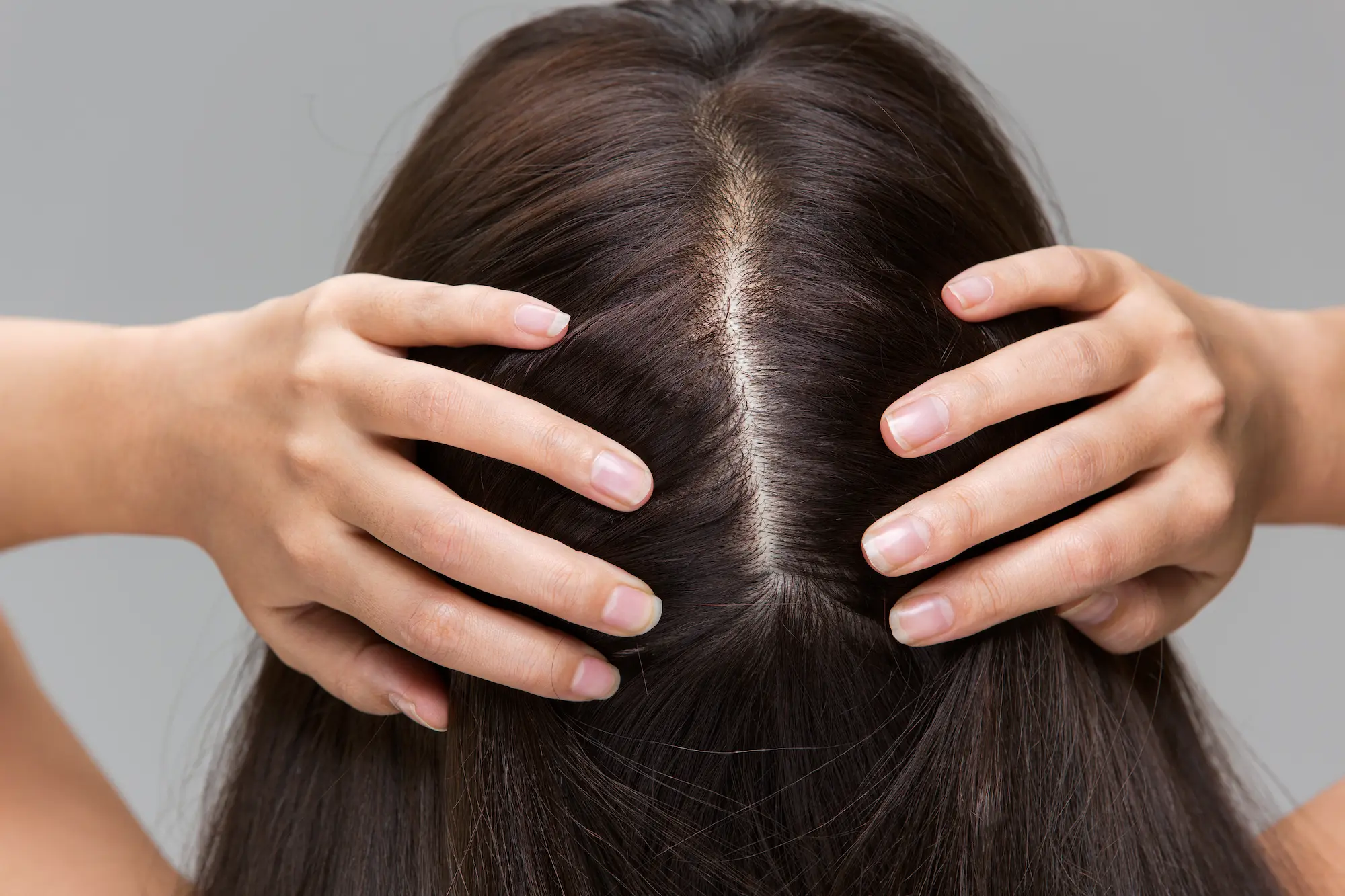
Next to the ears, the scalp is one of the most neglected areas of skin on the body. Many of us forget that the scalp is skin, probably because our hair covers most of it. Out of sight, out of mind. Let’s face it, our hair steals the spotlight. Hair holds cultural and aesthetic value and often makes the scalp seem insignificant. For those of you that are follicle-ly challenged, your scalp often takes on a different light because you can actually see it. My husband is bald so scalp care for him is very connected to his skincare routine for his face.
I’m here to remind you that scalp skin deserves respect too. When we think of shampoo, we often just look at using it for washing our hair. We need to change our mindset that shampoo is more of a scalp wash or cleanser. You can use it for your hair too, but focus on washing the scalp and removing dirt, oil and product build up. I’m a big fan of a double cleanse for the scalp. I wash first with an antidandruff shampoo followed by my regular shampoo. This helps keep my scalp in check especially since I only wash every 3 days and have an addiction to dry shampoo.
The scalp may also need to be moisturized and it definitely needs protection from the sun. Just like your face, you can also exfoliate the scalp with ingredients like salicylic acid or glycolic acid. Washing and exfoliating are based on your scalp’s individual needs so there isn’t a one size fits all. The important thing is to use products that are not damaging to your hair and if you wash more frequently, then minimize heat styling tools. The damage everyone fears from frequent washing isn’t necessarily about the washing itself–it’s about using harsh products, which can strip natural oils or good bacteria, or having to heat style more often–both of which can cause damage to your hair and your scalp.
The scalp is pretty unique and has its own microbial community due to its environment shaped by sebum, moisture, and an acidic pH. The scalp is densely packed with hair follicles and sebaceous glands that create a moist and lipid-rich environment which supports microbial growth. The hair follicles also provide regions for anaerobic bacteria to grow. So in essence, your scalp is teeming with microbes that need to live in harmony for optimal scalp health.
When the scalp microbiome is off, that’s when you see various scalp conditions like itching, flaking or pimple bumps. Ever noticed those flakes on your black shirt? Dandruff and seborrheic dermatitis are common scalp conditions that are the result of overgrowth of Malassezia yeast. Malassezia love an oily scalp and can disrupt the skin barrier, which leads to inflammation, itching, and flaking. Most people see the flaking and assume their scalp is dry, so they wash less. However it’s Malassezia that creates the flakes and they feed off the oils in your skin, so the less you wash, the more oil production you have, and you guessed it–the more Malasseziacan grow and produce more flakes. Ironic, huh? Take away–if you have dandruff or seborrheic dermatitis, then washing more frequently is often beneficial, although often inconvenient.
What about hair loss? Yep, even hair loss can be linked to the scalp microbiome. Androgenetic alopecia (male and female pattern hair loss) and alopecia areata (autoimmune form of hair loss) have both been linked to microbial imbalance on the scalp. In alopecia areata, reduced Staphylococcus epidermidis levels and high Propionibacterium acnes and Alternaria levels may contribute to inflammation and follicle damage. Androgenetic alopecia is also associated with high Malassezia levels, which may trigger inflammation and follicular miniaturization. Anti-dandruff or anti-fungal shampoos have anti-inflammatory properties and can reduce Malassezia levels on the scalp. So if your derm recommends an antidandruff shampoo for your hair loss, don’t think they weren’t listening. It’s a legit recommendation as a part of a hair loss regimen.
Trotter’s Take: The scalp is a unique piece of skin real estate that deserves attention and a healthy scalp results in optimal hair growth. Want a heads up on scalp care? Then listen in with Erika Ramos, PA-C, who has a passion for scalp health.