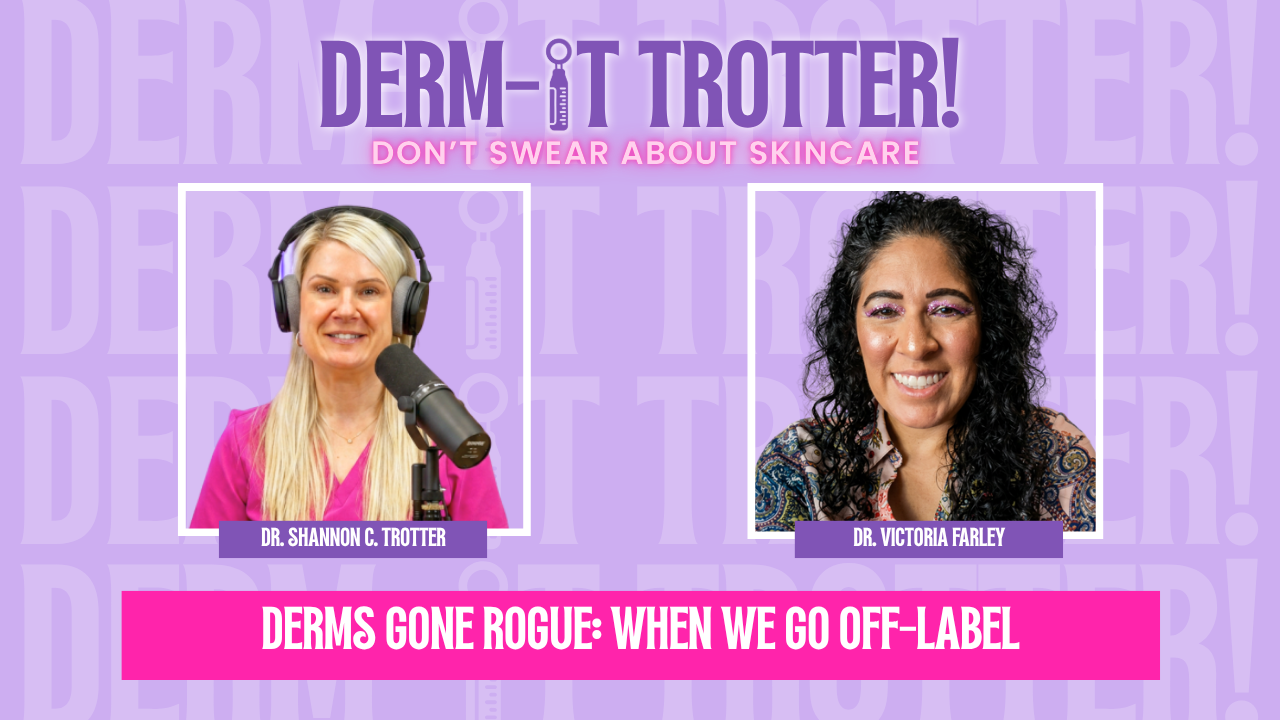
“Off-label” can sound like a red flag, but in dermatology it’s often the most practical way to treat real people with real problems. Dr. Trotter sits down with board-certified dermatologist Dr. Victoria Farley to explain what FDA approval actually means, why many effective skin treatments never get a specific label, and how we talk through safety, side effects, and expectations – so patients feel confident rather than confused.
We walk through concrete examples you may recognize from your own care: spironolactone for hormonal acne and androgen-related conditions, finasteride and dutasteride considerations for women, and why low-dose oral minoxidil can be a game-changer when topical routines are hard to keep up with. We also cover a classic “wait, why does my prescription mention cancer?” moment with topical 5-FU, and how that same medication can be used off label for stubborn plantar warts with thoughtful counseling and monitoring.
From there, we zoom out to what’s next in medical dermatology: GLP-1 drugs and their emerging connection to inflammatory skin disease like psoriasis and hidradenitis suppurativa, plus the rapidly expanding world of JAK inhibitors for immune-mediated conditions including lichen planus, lichen sclerosus, granuloma annulare, and more. We also dig into chronic itch, especially in older adults, and why antihistamines are not always the best long-term answer, with off-label options like naltrexone and gabapentin entering the conversation.
If you’ve ever wondered whether off-label prescribing is legal, ethical, or worth it, this conversation gives you a clear framework: evidence, experience, and a patient-specific risk-benefit plan, plus the reality of insurance coverage and prior authorizations. Subscribe for more practical dermatology education, share this with a friend who’s navigating a confusing prescription, and leave a review with the off-label question you want answered next.