Sunscreen is still on everyone’s mind and so are the questions surrounding it. One part of the conversation that deserves attention is ultraviolet (UV) filters. If you’re wondering what a filter is, then you are not alone. An ultraviolet (UV) filter refers to a compound that absorbs, reflects, or scatters UV radiation. Sounding familiar? As you might have guessed, there are two main types of UV filters. 1. Organic (chemical) filters: These absorb UV radiation and convert it into heat. Examples include avobenzone, oxybenzone, and octocrylene.
2. Inorganic (physical/mineral) filters: These reflect and scatter UV radiation. Examples include zinc oxide and titanium dioxide.
Mineral filters such as zinc oxide and titanium dioxide provide broad-spectrum protection with minimal systemic absorption. Organic filters—including avobenzone, oxybenzone, and octocrylene—vary in photostability and may require stabilizers or combination formulas to maintain efficacy but can be more irritating for sensitive skin. Chemical filters, such as mexoryl SX/XL, tinosorb S/M, and uvinul are widely used in Europe and Asia due to superior UVA/UVB coverage and photostability, but they are not FDA-approved in the United States.
One of the concerns we’ve raised as dermatologists is the lack of filters available in the United States for sunscreen products. Regulation of UV filters differs substantially between the United States and other regions. In the U.S., the Food and Drug Administration (FDA) regulates sunscreens as over-the-counter drugs, requiring UV filters to be included in the FDA monograph or approved via a New Drug Application, which limits the introduction of newer, photostable UVA filters commonly available internationally. In contrast, the European Union, Japan, and South Korea regulate sunscreens as cosmetics, enabling faster market access for innovative filters. As a result, European and Asian sunscreens often contain a broader array of UVA filters, such as bemotrizinol and bisoctrizole, which are not FDA-approved despite demonstrated safety and efficacy. This is why a lot of consumers have looked for sunscreen options overseas.
UF filters also benefit from various technologies to improve stability. They may be formulated with an encapsulation system—including nanostructured lipid carriers, mesoporous silica, and sol-gel capsule, which enhance filter photostability and reduce skin penetration. Encapsulation can prevent degradation and limit systemic absorption, thereby improving safety and durability of protection. Ever wondered about the Helioplex® that Neutrogena label or Cell-Ox Shield® on your favorite La Roche Posay sunscreen? Well, these are examples of various proprietary technologies designed to improve filter stability too. They also help with water resistance and visible light defense.
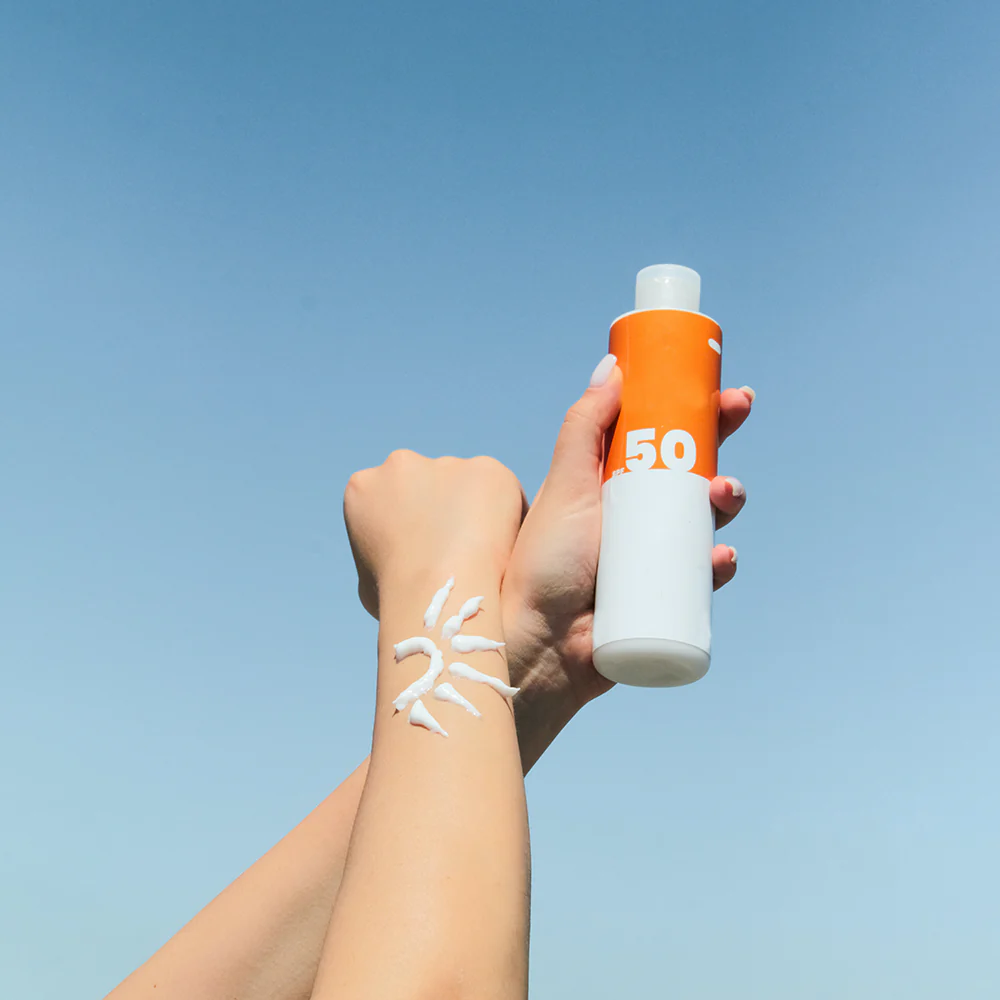
To measure the effectiveness of filters in sunscreen, a sun protection factor (SPF) rating is often used. The SPF is a numeric rating indicating the level of protection against UVB-induced erythema. SPF does not directly measure UVA or visible light protection and primarily guides the appropriate dose and frequency of application of sunscreen. As for UVA coverage, sunscreens in the US use the term “broad spectrum” and only have to pass the critical wavelength test, which confirms the sunscreen absorbs UVA rays up to 370 nm or more.
In Europe, the UVA-PF system is used and is a score based on how much UVA light the sunscreen filters out. It stands for Ultraviolet A Protection Factor. The UVA-PF is determined one of two ways: 1. in vivo (on real skin), aka PPD test. With the PPD test, sunscreen is applied to the skin and then the time it takes for the skin to start darkening from UVA rays is recorded and compared to skin without sunscreen. The second method is done in a lab setting. In this method, sunscreen is applied to a special surface that mimics skin and a device measures how much UVA light passes through it. To be considered “broad spectrum,” the UVA-PF must be at least one-third of the labeled SPF.
The UK also has the UVA Star rating system. The UVA Star Rating Systemic evaluates the ratio of UVA to UVB protection using lab-based testing. Sunscreens are rated from 0 to 5 stars, with 5 stars meaning the UVA/UVB protection is very well balanced. Often a rating of 4 stars and above is recommended. In Japan and many other Asian countries, the Protection Grade of UVA (PA) system is used. The PA systemic rates products from PA+ (some UVA protection) to PA++++ (highest UVA protection) based on the persistent pigment darkening assay.
Trotter’s Take: Complete sun protection means safe,efficacious filters that protect against both UVA and UVB rays and it’s important for the US to reform the sunscreen filter approval process. Luckily this is in the works with the SAFE Sunscreen Standards Act (https://www.congress.gov/bill/119th-congress/house-bill/3686/text).
While sunscreen filters play a major role in your sun protection routine, check out my latest podcast with Dr. Katie Varman, to learn other ways to strengthen your skin’s defense against the sun.